





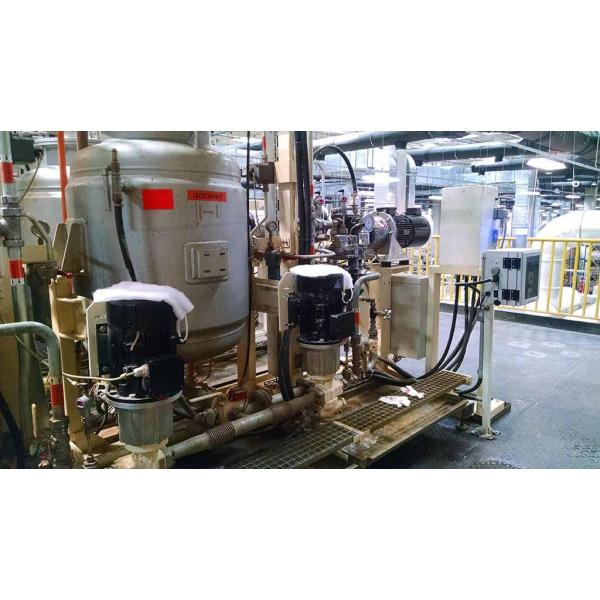
Polyurethane foam ends up in mattresses, car seats, insulation, and packaging. Making it takes chemistry that is efficient at scale but unforgiving when safety systems fall short. A single foam plant can have toxic, flammable, and asphyxiant hazards under one roof, sometimes in the same room. Use this checklist to see whether your gas detection program is keeping up.
1. Know every hazard on your floor
- Isocyanates (TDI, MDI): Potent respiratory sensitizers that can cause lasting occupational asthma. Exposure limits sit in the parts-per-billion range, so a leak can be hazardous long before anyone smells it.
- Flammable blowing agents: Pentane and cyclopentane vapors are heavier than air and pool near floors, pits, and trenches, where ignition sources are often present.
- Amine catalysts and VOCs: These add irritation, odor, and flammability concerns.
- Carbon monoxide: Exothermic curing can cause stacked foam to overheat and smolder.
- Oxygen deficiency: Nitrogen and CO₂ can displace oxygen in enclosed or low-lying areas.
Each hazard calls for a different sensing approach, so no single technology covers a whole plant.
2. Use detection built for ppb-level isocyanates
General-purpose sensors aren't designed for TDI and MDI at the concentrations that matter for health. DOD Technologies specializes in low-level detection and offers colorimetric, electrochemical, and FTIR technologies, so each hazard can be matched to a suitable detection principle.
For isocyanates, the anchor is the ChemLogic® line. The ChemLogic CL2 is DOD's flagship monitor for multipoint, low-maintenance colorimetric detection, designed to deliver interference-free, low-level readings. A single system can monitor two different points in a facility, such as mixing heads, pour lines, and chemical storage. Its single-point sibling, the CL1, utilizes the same style cabinet detecting TDI and MDI down to 1 part per billion.
3. Match sensor technology to your process
Foam plants are hard on instruments. Silicone surfactants common in foam formulations can poison certain combustible-gas sensors, and heat, humidity, dust, and aerosols erode accuracy over time. DOD's range includes flame and catalytic detectors, PID detectors for VOCs, and electrochemical and FTIR options, which helps you choose the technology that fits your formulation and conditions.
Reliability also means trustworthy alarms. If detectors alarm falsely and often, people learn to ignore them. Interference-free detection is a safety feature, not a convenience.
4. Cover people, not just rooms
- Fixed monitors at high-risk points, with alarm outputs that can trigger ventilation or process response.
- Portable instruments for spot checks, confined-space entry, and tracking down a suspected leak. The portable ChemLogic CLPx and handheld electrochemical units are lightweight and ready to go for unforeseen events.
- Personal monitoring, such as DOD's dosimeter badges, to document time-weighted worker exposure instead of assuming it.
- Surface and dermal sampling, because isocyanate exposure is not only airborne. Contamination on surfaces and skin matters too.
5. Put detectors where gas actually goes
Even a perfect sensor is useless in the wrong spot.
- Place detectors for heavier-than-air vapors low, near tank farms, day tanks, metering pumps, mixing heads, and unloading stations.
- Cover pits, trenches, and sumps, where vapors collect and oxygen deficiency can develop.
- Monitor curing and storage areas where foam may overheat.
- Account for airflow. A detector in a dead zone, or directly in a supply air stream, can miss a release.
A specialist who has seen foam plants before can validate your layout against a formal hazard assessment. DOD Technologies provides years of instrumentation and application experience and offers both mail-in and on-site field service.
6. Tie detection to action
An alarm alone is not a safety strategy. Depending on your design, a confirmed detection can sound local and remote alarms, increase ventilation, shut off chemical or blowing agent supply, stop potential ignition sources, or start evacuation procedures. Fast automated responses buy time, and time separates a near miss from an incident.
7. Commit to the program, not just the purchase
Reliable detection is maintained, not installed once. Strong programs include:
- Scheduled bump tests and calibration, per manufacturer guidance and your site risk assessment
- Timely replacement of cassettes, sensors, and consumables
- Clear alarm setpoints and response procedures that every shift understands
- Training and drills
- Periodic audits of alarm history, near misses, and process changes
A supplier that supports you after installation makes this far easier to sustain. DOD positions its global service team around customer uptime.
The bottom line
Unreliable detection can mean worker injury or long-term illness, fires and explosions, regulatory penalties, and costly shutdowns. Set against that, the investment in the right instruments, a sound design, and a dependable service partner is modest.
Ready to check your plant against this list? Contact DOD Technologies to talk through your process, your hazards, and the right mix of fixed, portable, and personal monitoring.
Requirements vary by jurisdiction and facility. Consult applicable regulations, manufacturer guidance, and a qualified safety professional when designing or auditing a gas detection program.


